~
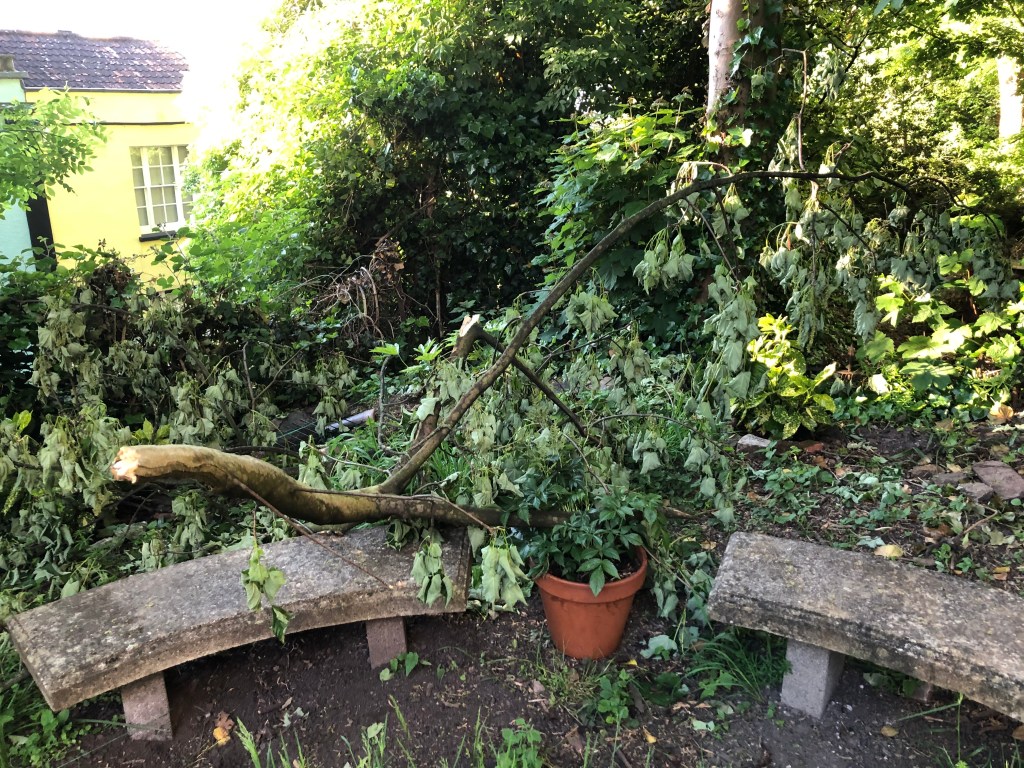
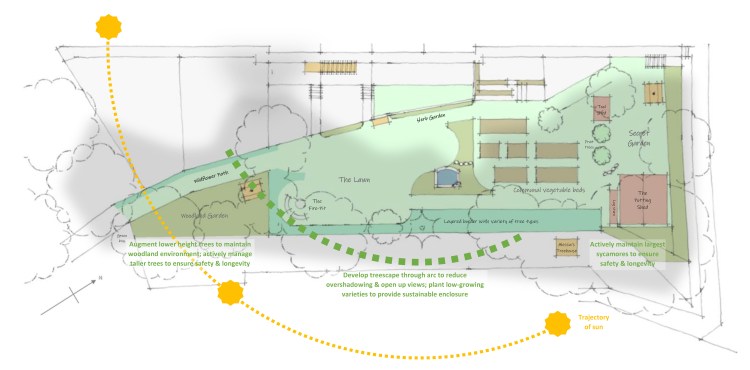
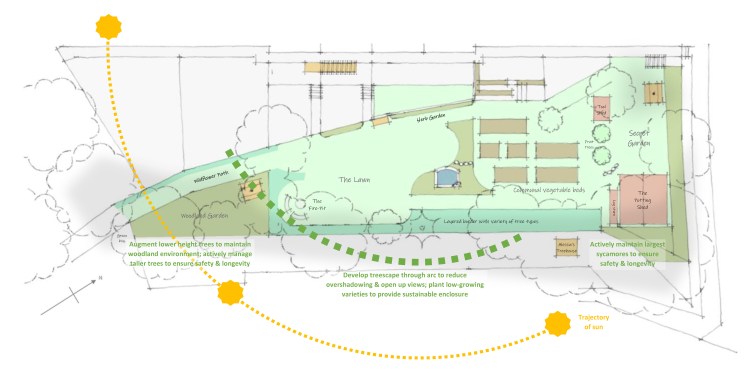
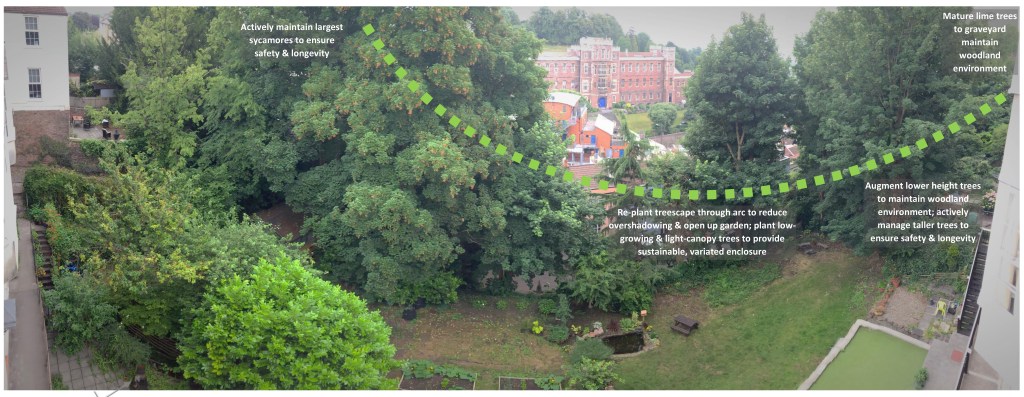
The trees at Dover Place have been unmanaged for several decades. Individual households have, on ocassion, been forced to fell or reduce dangerous trees, but there has been no wider organisation to manage & protect the communal garden. Several sycamores – planted by ex-residents long since departed – have grown into behemoths, overshadowing large parts of the garden and presenting increasing safety risks to people & buildings.
Moving forward, collective and democratic management of the trees would be an important cornerstone of any proposals to improve the garden.
~
~
~
Examples of low-growing or open-canopy trees
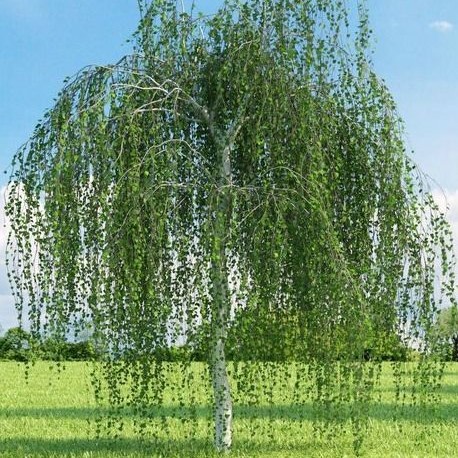


A graceful, attractive tree with light airy foliage and distinctive silvery-white peeling bark. They turn yellow then golden in autumn, bringing striking colour. Small birds, such as long-tailed tits, siskin, greenfinches and redpolls, are attracted by the abundant seeds and insects that it hosts.
The Woodland Trust
Magnolias are firm favourites, and for good reason. Their colours range from pure white to deepest purple and they fill the spring air with a gorgeous scent. Flowering begins in early spring and lasts until late summer/early autumn.
The National Trust
Industrious, delicate, colourful. The spindle is at its loveliest in autumn when its leaves turn russet and its pink and orange fruits ripen. Wildlife loves its leaves and fruit, and aphids flock to it, bringing with them an array of their predators
The Woodland Trust
~


Beautiful blossom and a bounty of bright red fruits. Wild cherry , one of the prettiest native trees, is relished by gardeners and wildlife. The spring flowers provide an early source of nectar and pollen for bees; while the cherries are eaten by birds, including the blackbird and song thrush; as well as mammals, such as the badger, wood mouse, yellow-necked mouse and dormouse.
The Woodland Trust
Rowan is an elegant tree with a mystical history. Its leaves and berries are a favourite for wildlife in woods and towns alike. Rowans provide pollen and nectar for bees and other pollinating insects, while the berries are a rich source of autumn food for birds, especially the blackbird, mistle thrush, redstart, redwing, song thrush, fieldfare and waxwing.
The Woodland Trust
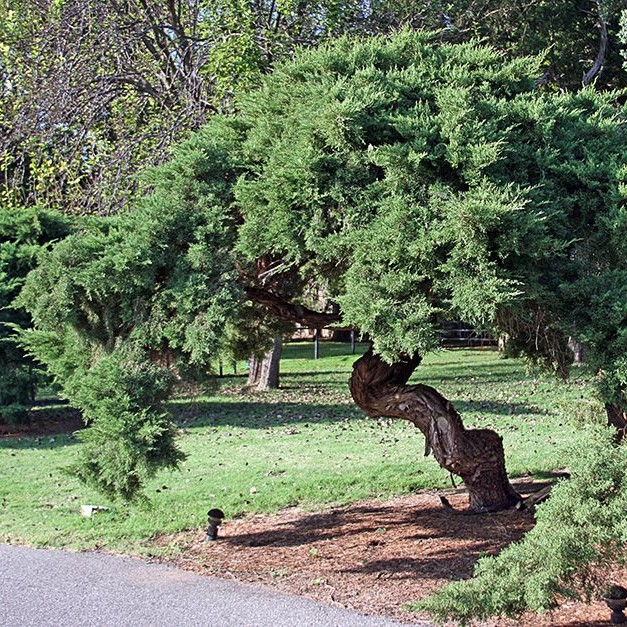
A cosy home for wildlife, the juniper is a much-loved evergreen that brightens up the winter months. Common juniper provides dense cover for nesting birds, among them the goldcrest and firecrest. A number of birds eat the fruit, including the fieldfare, song thrush and ring ouzel.
The Woodland Trust
~
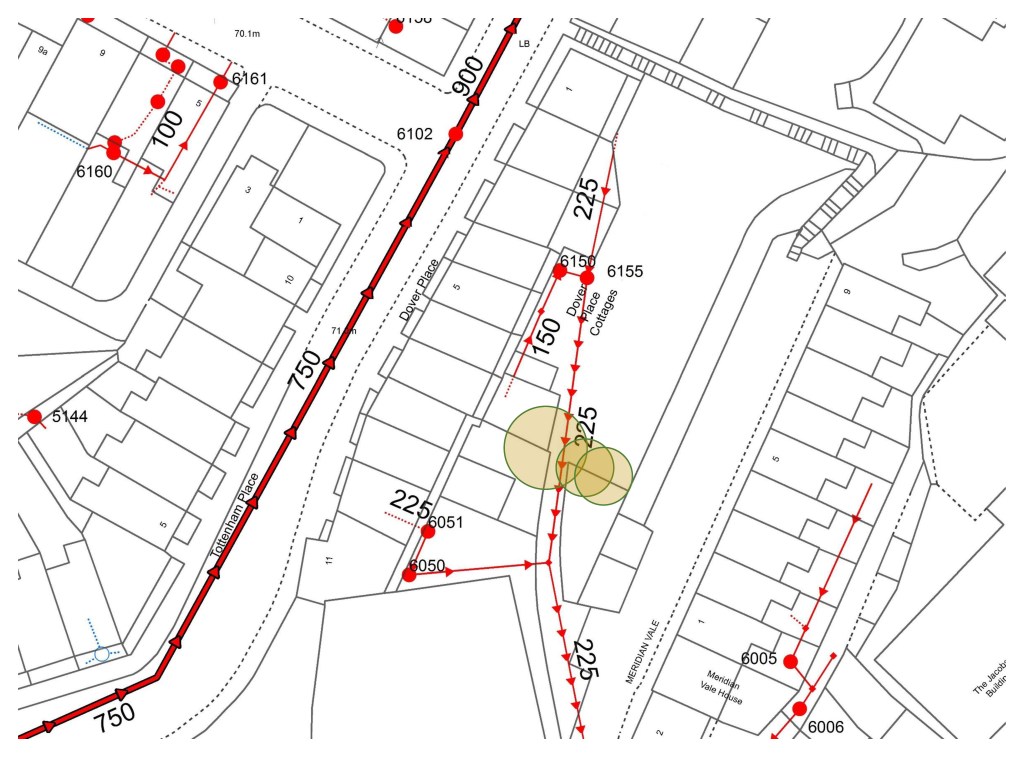
Drainage
The adjacent plan depicts shared drains where they pass through the garden. The brown circles represent three untended sycamores that have grown unchecked and may evetually undermine the drains, if not managed.
Replacement planting in this area would ensure that, in future, root structures from unmanaged trees pose no risk to drains & services.
~
 Dover Place Residents' Garden